
A translation by Judith Turcotte.
I am getting back to the discharges in the St. Lawrence River. I am not referring here to the discharges of wastewater by the municipalities. Municipalities have reduced the number of discharges each year. According to the list published by Fondation Rivières, there were 39,187 discharges in 2025. Not long ago, these discharges exceeded 60,000. This improvement must be emphasized.
In this blog, I refer to discharges of chemical products. These discharges are not rare. They make the headlines for a day and there is rarely a follow-up. These events are so numerous that I could write a dozen blogs on the subject. I have chosen to present the history of one of these discharges which will illustrate the difficulties met and especially what seems to show the indifference of the authorities.
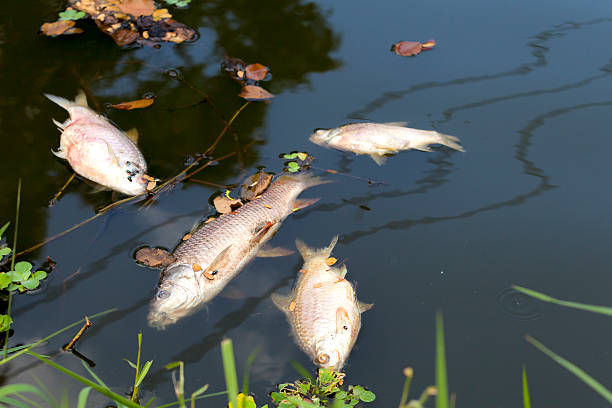
In July 2019, hundreds of fish were found dead on the shores of the Ottawa River as many on the Québec side as on the Ontario side. Eighty-five species of fish live in the Ottawa River which flows into the St. Lawrence River. Following the incident, the journalists declared that it was, for the moment, impossible to know what had killed these fish. They informed us that investigations were ongoing on in the two provinces. According to them, the results of the analysis would be divulged in the next few days. The carcasses of the fish were also sent to the Québec Wildlife Health Center in Saint-Hyacinthe. So far everything seems fine and then nothing.
Seven years later, in January 2026, a publication of the Ottawa Riverkeeper caught my attention. The organization informs us that a penalty of 1,365 million dollars had been imposed following the massive death toll of the fish that occurred in 2019. Ottawa Riverkeeper is an organization that plays the role of defender and spokesperson of the drainage basin of the Ottawa River. The penalty in question was announced by Environment and Climate Change Canada for the deposit of a deleterious substance in the Lièvre River, a tributary of the Ottawa River.
The substance released by this Gatineau fabrication facility of chemical products is sodium chlorite, a product used in the treatment of water (really!) and the bleaching of textiles and paper pulp. The disposal is due to the fault of a piece of equipment. I remind you that the incident happened between June 27th and July 19, 2019. The penalty was imposed in January 2026 seven years later.
Environment and Climatic Change Canada who had imposed the penalty did not establish a direct link between the discharge and the death of the fish. The province of Québec identified the cause as the Brookfield power station. Despite this conclusion, the federal government continued its investigation. It imposed the penalty, seven years later to Superior General Partner Inc. (a subsidiary of Erco Worldwide) and to an individual. The company and the individual pleaded guilty even if the government could not establish a connection between the death of the fish and the discharge. The plea represents an admission of guilt. It is difficult to understand that the government is incapable in establishing a connection between the discharge and the death of the fish.
In this case, the company admitted its error and received a penalty. In most of the other cases, the enterprises responsible for these discharges do not boast about it. In this case, the individual who received the penalty is accused in having waited five days before advising the authorities. This individual is the plant’s technical and environmental director. The authorities were thus advised of the discharge and they waited seven years to impose the penalty. An employee received a penalty for having delayed 5 days to advise the authorities while these same authorities took seven years to impose a penalty without being able to establish a link between the chemical spill and the death of the fish.
It seems to me that explanations would be required.