
A translation by Judith Turcotte.
One hundred and forty-five species of algae are regularly being consumed in the world. In St. Lawrence River, the harvesting and cultivation of algae remain marginal and hardly developed. The majority of algae consumed in Canada is imported from Asia. Québec is looking to position itself in what remains a niche market. Their commercialization is difficult because these algae remain unknown to consumers. The creation of a demand for these products remains an important challenge. It is always the same problem: what comes first, the chicken or the egg; if a demand is not created, the market will not develop.
We divide the edible algae into three species according to their colour; they can be brown, red or green. These algae can be used in soups, in salads and as seasoning. They represent an interesting product for vegan cooking. Amongst the most popular, we find the red algae Nori used in sushi (sushi rolls), brown wakame algae used in soups or in salads and sea lettuce used in a large variety of dishes. Many are imported from Asia and some, growing the St. Lawrence, are mainly harvested in the Gaspé Peninsula and on the North Shore.
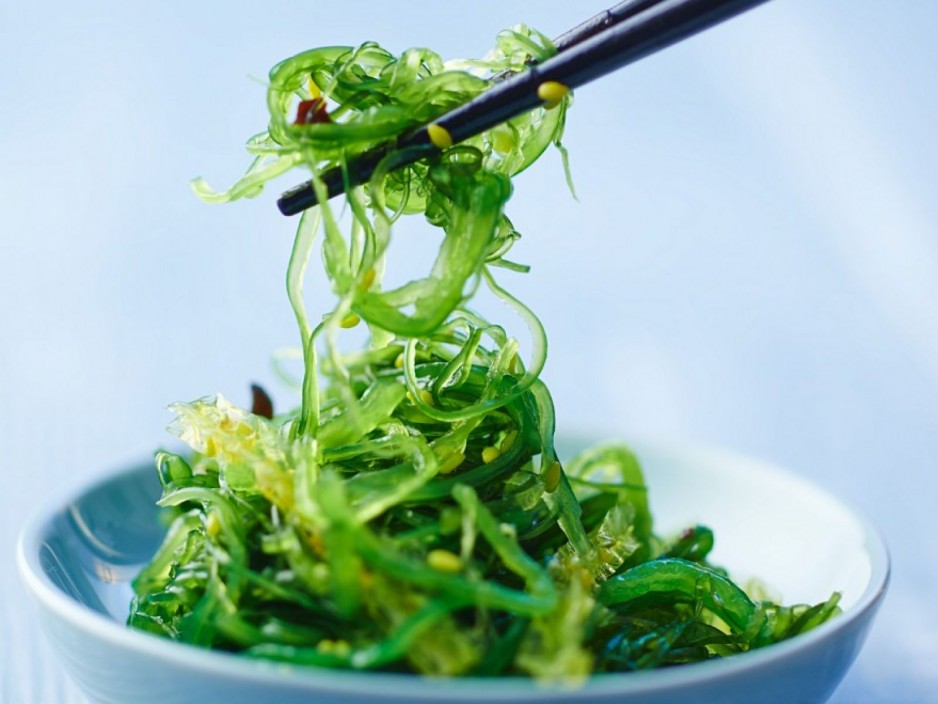
To learn more about the algae available on the market, I invite you to visit the sites of Océan de saveurs or Seabiosis that offer a variety of algae in different formats along with recipe suggestions. Algae remain a small market in Québec with the result that seaweed farming and mariculture (sea farming) are not well developed. In the world, however, the cultivation of algae reaches 35 million tons. China, Korea, Japan and the Philippines account for 95% of this production. Here, the harvest remains artisanal and will remain so as long as the demand for the product remains low.
The algae culture in Québec is at its beginnings. Only two companies, Boréalgue (Escoumins) and Seabiosis (Carleton-sur-Mer) are making an effort in developing an expertise in the production of algae and the valorization of this resource. They both started their operations by picking wild seaweed to become familiar with algae in their natural environment. Today, they are trying to cultivate the sweet kelp (Atlantic Kombu) and Wakame. Tests are in progress to cultivate the Nori used in sushi. When I wrote that the cultivation of algae was in its infancy, these trials aimed at cultivating Nori algae are taking place this year (2026).
To help in the development of this cultivation, we need to increase the demand. I encourage you to explore the products and recipes on the two sites I mentioned and give it a go. You can also just buy a wakame salad at your fish shop. I buy mine in Brossard at Odessa poissonnerie in Quartier DIX30.